Fast stabilization
We focus first on stopping the spread: shutoff coordination, extraction, and setting the right drying conditions before materials deteriorate further.
Water Mitigation • Atlanta, GA
When water gets in, minutes matter. Our crew responds fast across Atlanta to stop the spread, pull out water, dry the structure, and document the loss so you can move forward with a clear plan.
✓Source control
✓Moisture-based drying
✓Clear documentation
Stabilize, Extract, Dry
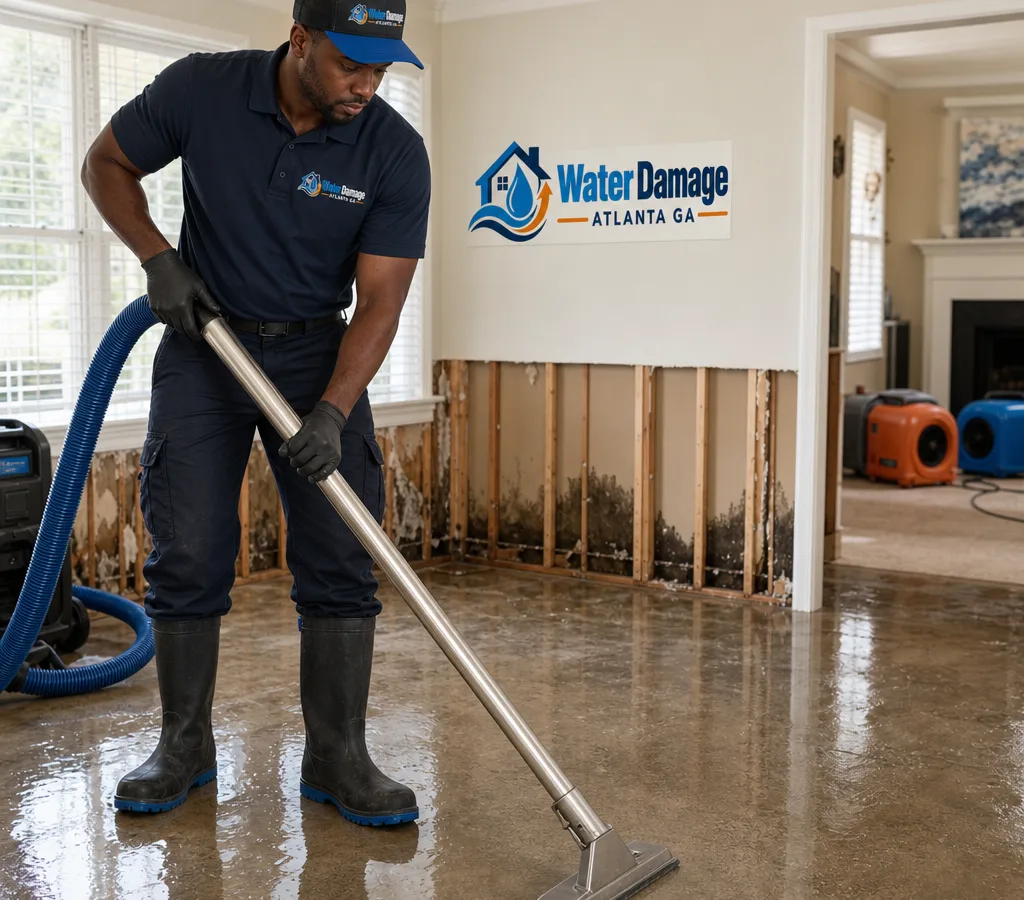
If you are searching for water damage mitigation Atlanta, you are likely dealing with active water, rising humidity, or materials that are starting to swell and stain. Mitigation is the immediate work that limits damage: stopping the source, removing standing water, setting up drying equipment, and controlling moisture so the situation does not turn into a bigger rebuild.
Atlanta properties can vary widely, from older homes with plaster walls and solid wood trim to newer builds with engineered materials that can wick water quickly. Either way, the goal is the same: stabilize the structure, prevent secondary damage, and create a documented drying plan based on real moisture readings.
Our team at Water Damage Atlanta GA focuses on practical, step-by-step mitigation:
If you also need full repair after the space is stabilized, many customers start by getting the immediate situation under control and then decide the next steps for repairs and restoration. Broader water damage restoration in Atlanta can include rebuild planning once drying is complete.
Controlled Mitigation
We focus first on stopping the spread: shutoff coordination, extraction, and setting the right drying conditions before materials deteriorate further.
Drying is guided by moisture readings in affected materials, not by a fixed number of days. Equipment is adjusted as the structure responds.
When needed, we isolate affected areas to keep humidity and debris from migrating to clean rooms, especially in occupied homes and active offices.
Photo documentation and job notes help you understand what happened, what was done, and what still needs attention.
We identify what can be dried and saved versus what should be removed for effective drying, so you do not lose time guessing.
You get straightforward explanations of what we are seeing in your property and what the next 24 to 48 hours should look like.
Hidden Water Paths
Water rarely stays where you first notice it. It moves along gravity, capillary action, and air pathways, which is why water mitigation Atlanta work needs to start with a full assessment.
Common spread patterns we look for:
We use non-invasive inspection tools where possible, such as thermal imaging as a guide, and confirm with moisture measurements to decide what needs drying access. The objective is to dry the structure to appropriate levels, not just make the room look better.
Request Emergency Service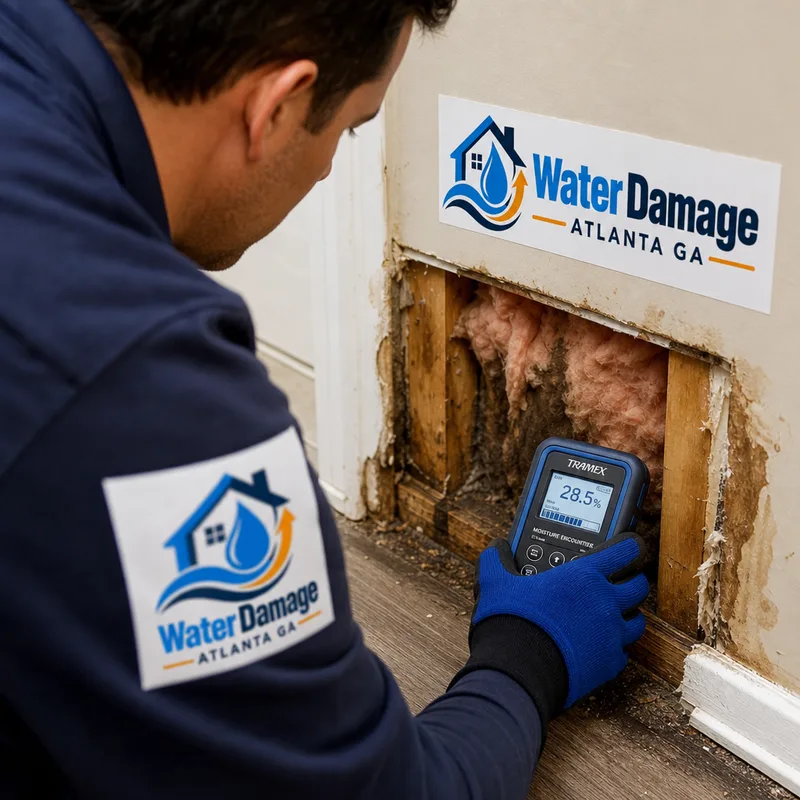
Assess, Extract, Verify
We identify hazards such as electrical exposure, slip risks, and ceiling saturation, then help coordinate water shutoff or temporary measures to stop ongoing intrusion.
Standing water is extracted. When needed, we remove materials that block drying, such as saturated pad, collapsed drywall, or wet insulation, based on conditions on-site.
We place air movers and dehumidifiers to create effective airflow patterns, control humidity, and dry cavities and subfloors. Containment is added when dust or affected materials require it.
Drying is not set-and-forget. We track moisture levels and ambient conditions and adjust equipment placement and capacity as the property responds.
When target materials reach stable, acceptable moisture levels, we document the result and outline the repair scope you may need next.
Built for Atlanta Conditions
The same type of leak can behave differently depending on the building and the area. In Atlanta, we commonly see mitigation needs shaped by:
We approach each job with the same fundamentals: map the affected area, dry what can be dried, remove what cannot, and keep the rest of the property protected while the mitigation work runs.
Straightforward Cost Guidance
Water damage mitigation in Atlanta typically ranges from about $900 to $4,500 for many residential situations, with larger losses and commercial spaces running higher. A small localized extraction and drying setup may land near the low end, while multi-room flooding with material removal, containment, and multiple days of monitoring trends toward the high end.
Final price depends on how far the water traveled, the category and cleanliness of the water, how many rooms and levels are affected, what materials must be removed to dry correctly, access and parking or loading constraints, and the number of drying days required. Exact costs are confirmed after an on-site inspection and moisture mapping.
Atlanta Customer Experiences
“We had water come through a laundry supply line and it spread under the flooring into the hallway. The crew explained what they were measuring, pulled water fast, and set up drying that actually brought the moisture down day by day. The documentation made it easy to understand what was happening.”
“What I appreciated most was how quickly the situation felt controlled. They found where the water was hiding, removed what needed to come out, and kept the rest of the house livable while everything dried.”
Answers Before Mitigation Begins
Response time depends on current demand and the size of the event, but mitigation is treated as urgent because delays can increase the drying footprint and secondary damage. Once you reach out, we will confirm availability and what to do immediately, such as safe shutoff steps and protecting floors, while the crew is en route.
Water mitigation is the immediate work to stop active damage and dry the structure, while restoration covers the repair and rebuild after the space is stabilized. Many projects begin with mitigation first, then move into repairs once moisture levels are verified.
Not always, but sometimes removal is the fastest and safest way to dry correctly. If drywall is wicking water or insulation is saturated, limited removal can provide drying access and prevent trapped moisture behind finishes.
Many drying projects take several days, but the timeline depends on how wet the structure is, the materials involved, and the humidity conditions. We monitor moisture content and adjust equipment rather than guessing a fixed end date on day one.
Yes. Condo mitigation often requires careful moisture checks along shared walls and ceilings, plus coordination around building access and equipment placement. Documentation is especially important in multi-unit situations where impact can cross unit lines.
Stop the water source if it is safe, avoid rooms with sagging ceilings or wet electrical areas, and move small valuables out of the wet zone if you can do so without risk. Avoid running household fans with windows open during humid weather, since bringing in moist air can slow drying.
Start Mitigation Safely
Tell us what happened, what areas are wet, and whether the water is still active. We will guide the next safe steps and schedule an on-site assessment to start mitigation and protect your Atlanta property.