
A moisture-first scope
We focus on how the area got wet and how to keep it dry, then we build the cleanup plan around that. Without moisture control, mold returns.
Mold Specialist • Atlanta, GA
Get a clear plan to find the moisture source, contain the area, remove contamination safely, and repair what was damaged so your home can be used normally again.
✓Moisture-source investigation
✓Controlled containment
✓Written work scope
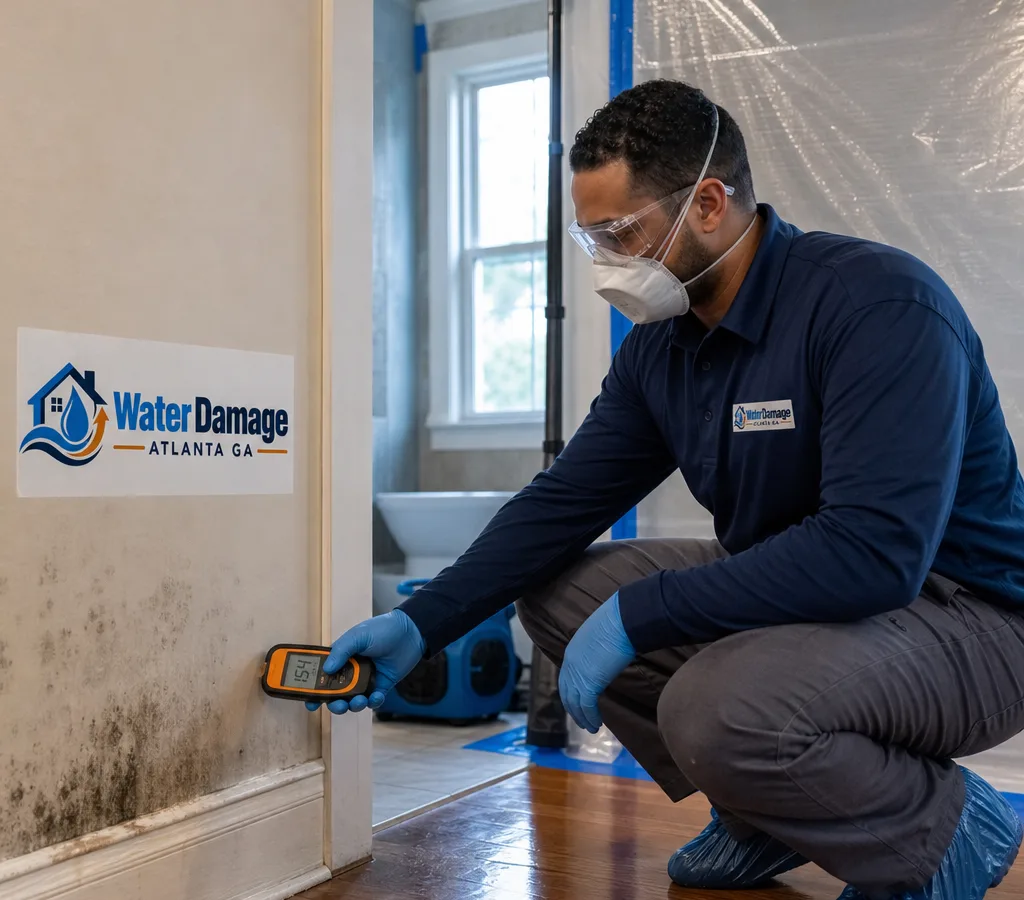
Moisture First, Cleanup Second
If you are searching for a mold specialist Atlanta GA homeowners can trust, you are usually dealing with one of two problems: visible growth that keeps coming back, or a musty odor with no obvious source. Either way, the work has to start with moisture. Mold does not persist without water, humidity, or repeated condensation.
A proper mold visit should focus on four things:
Atlanta's humid months can turn small moisture issues into recurring mold problems, especially in bathrooms, basements, and crawl spaces. The goal is not to mask odor or spray and hope. The goal is to fix the conditions that let growth return.
Atlanta Mold Investigation
Our team at Water Damage Atlanta GA approaches each job like a building investigation first and a cleanup second. Mold shows up in patterns, and knowing where to look speeds up the diagnosis.
Common areas we evaluate in Atlanta homes and rentals:
Neighborhood-specific housing differences matter. A condo in Midtown can have repeated condensation or HVAC drain issues that affect shared walls. Older homes in Virginia-Highland and nearby areas sometimes have layered renovations where small plumbing leaks travel before they show up. In Buckhead, finished basements and upgraded bathrooms can hide slow leaks until flooring or trim starts to swell.
If you are dealing with active leaking or wet materials, addressing the moisture quickly is the priority; our water damage restoration work often runs in parallel with mold evaluation when conditions overlap.
Request Emergency Service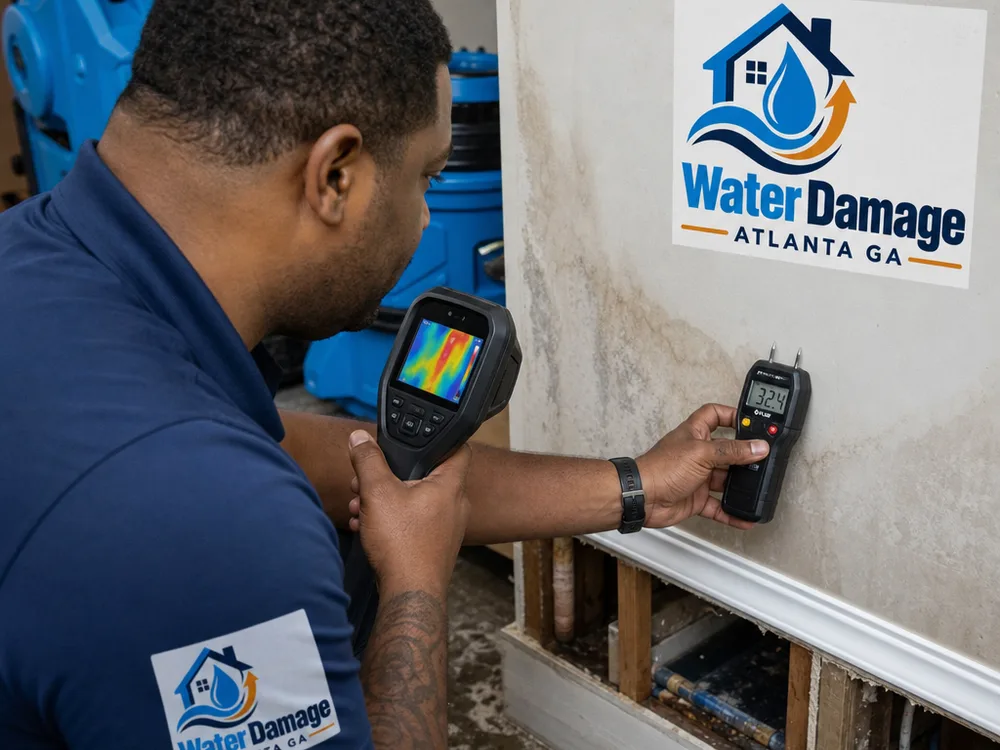
A Complete Remediation Scope
We focus on how the area got wet and how to keep it dry, then we build the cleanup plan around that. Without moisture control, mold returns.
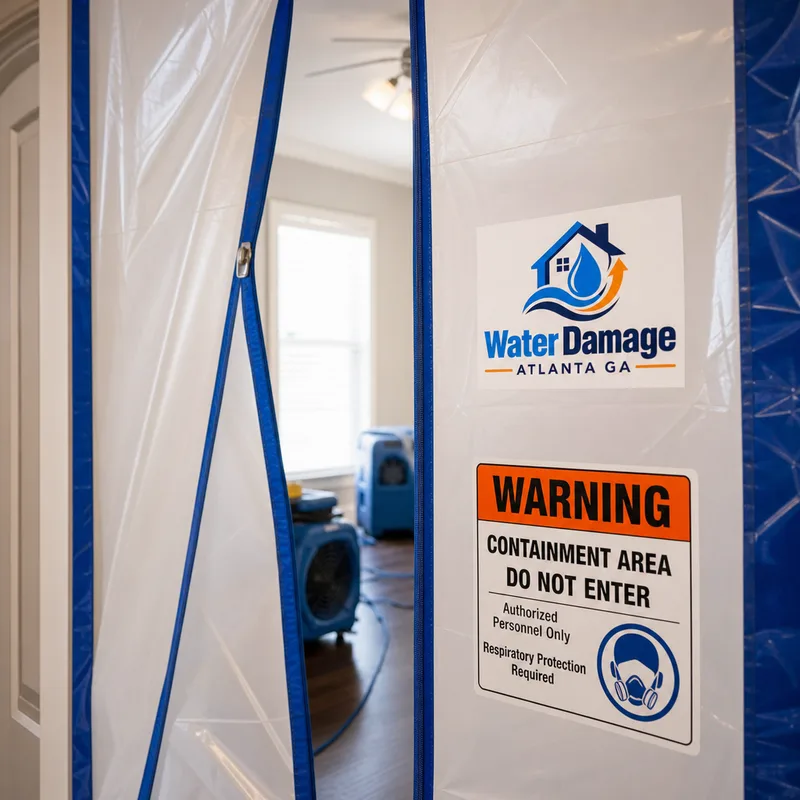
We set up the right level of isolation for the space, including plastic barriers and HEPA air filtration when disturbance could spread contamination.
Unsuitable porous materials are removed and disposed of correctly. Salvageable framing and surfaces are cleaned with HEPA methods and proper wiping techniques.
You receive a written scope that explains affected areas, what is being removed, what is being cleaned, and what repairs are needed to put the space back.
Drywall, trim, paint, and flooring tie-ins are planned so the space can be restored after remediation without leaving gaps or unfinished transitions.
Inspect, Contain, Clean
We inspect the area, check likely sources (plumbing, roof paths, HVAC condensate, ventilation), and use moisture readings to understand how far the issue extends.
You get a straightforward plan: what will be contained, what will be removed, what can be cleaned, and what repairs are expected afterward.
We isolate the work area, protect adjacent finishes, and set up HEPA filtration and negative air when appropriate for the environment and material removal.
Affected porous materials are removed, bagged, and disposed of. Remaining structural surfaces are HEPA vacuumed and wiped. We avoid unnecessary fogging and focus on contact cleaning where it counts.
We confirm the area is dry, then coordinate the repair plan so the space can be put back into service. If third-party clearance testing is desired, we can help you time it correctly.
Straightforward Cost Guidance
Most Atlanta mold remediation projects typically range from about $1,000 to $6,000, with small, contained cleanups often closer to $750 to $2,500 and larger multi-room or HVAC-adjacent projects reaching $7,500+ when demolition and rebuild are included.
Final price depends on the size of the affected area, how much porous material must be removed, access (attic, crawl space, tight closets), the level of containment needed, and whether repairs like drywall and flooring are part of the scope. The exact cost is confirmed after an on-site inspection and written plan.
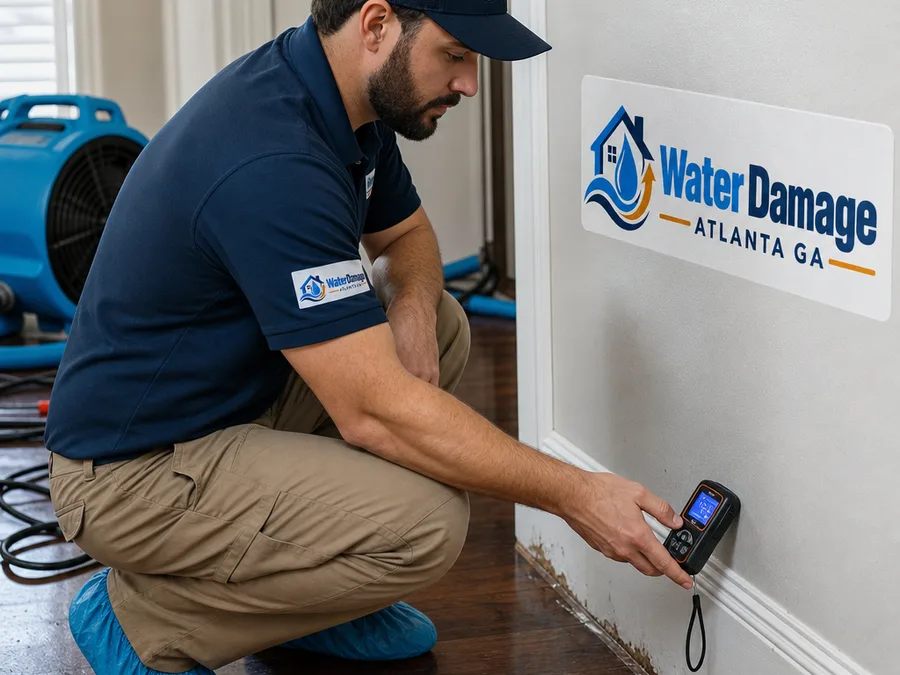
Controlled Work in the Field
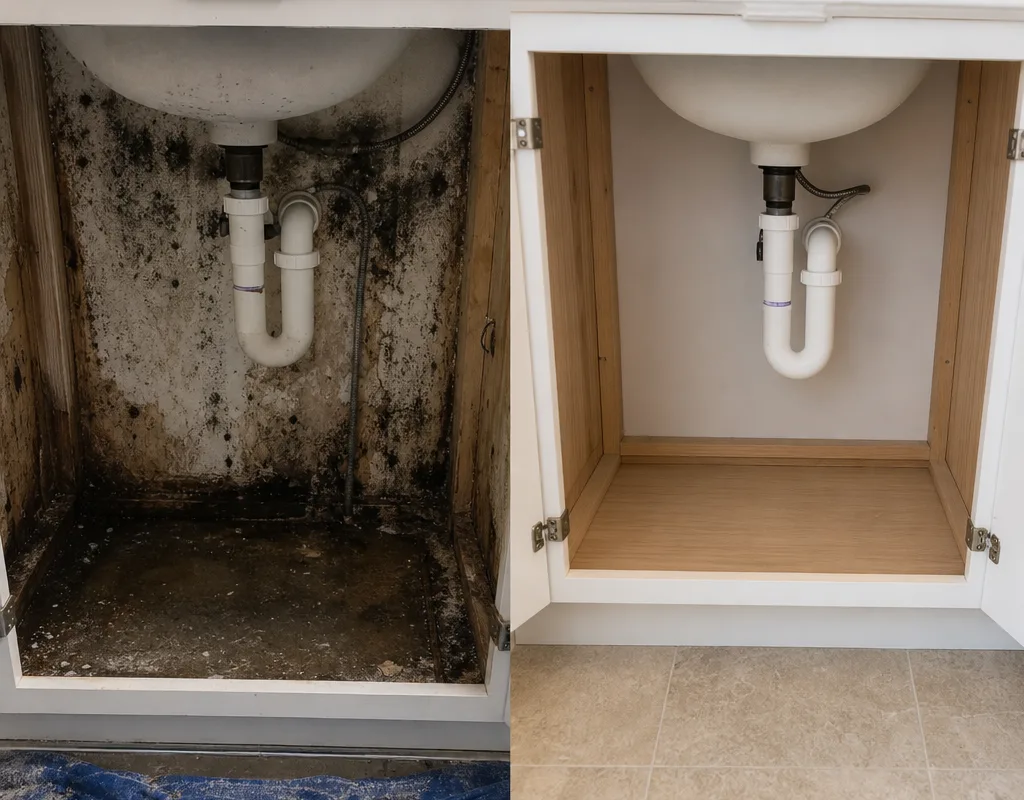
Start Before Disturbing the Area
If you have visible growth, recurring musty odor, or a recent leak, the next step is a site visit that identifies the moisture source and sets a safe, written scope before anything gets disturbed.
Answers Before Work Begins
Many mold jobs can start within 24 to 72 hours once the affected area is evaluated and the scope is agreed to, but timing depends on how much containment and demolition is required. If the space has active moisture (a leak, wet drywall, or damp flooring), early action matters because Atlanta humidity can keep materials from drying on their own.
You do not always need testing to begin remediation when there is visible growth and a clear moisture source, because the fix is still removal and moisture control. Testing can be useful when you have odor or symptoms without visible growth, when you need documentation for a property transaction, or when you want third-party clearance after work is complete.
It depends on the location and the containment plan. For a small, isolated area with proper containment and HEPA filtration, many households can remain in the home while the work area stays sealed. If the affected area is in a main living space, involves extensive demolition, or affects HVAC pathways, temporary relocation may be the safer option.
Recurring mold almost always means moisture is still present, often from slow plumbing leaks, poor bathroom ventilation, HVAC condensate problems, or crawl space humidity. A durable fix includes drying to normal levels, correcting the moisture pathway, and cleaning or removing impacted materials rather than painting over staining.
Drywall usually needs to be removed when mold has colonized the paper facing or when it has been wet for an extended period, because it is porous. Limited surface staining on non-porous materials can often be cleaned, but the decision is based on how deep the impact is and whether the material can be returned to a clean, dry condition.
Repairs are commonly part of getting the space back to normal, such as replacing drywall, baseboards, and paint, or resetting affected flooring sections. During the inspection we outline what would be removed and what would be repaired afterward so you are not left with an open wall and no plan.
Avoid disturbing the area because scraping or wiping can spread contamination. If you can do so safely, stop the water source (shut off the fixture valve or HVAC system) and keep doors to the affected room closed. If the issue is tied to a leak or saturated materials, stabilizing the moisture is urgent and is often handled alongside Atlanta water damage restoration.
Get Clear Next Steps
Share what you are seeing (odor, staining, a recent leak, or a damp crawl space) and we will confirm next steps, explain what the scope should include, and schedule an on-site evaluation.