
Rapid water removal
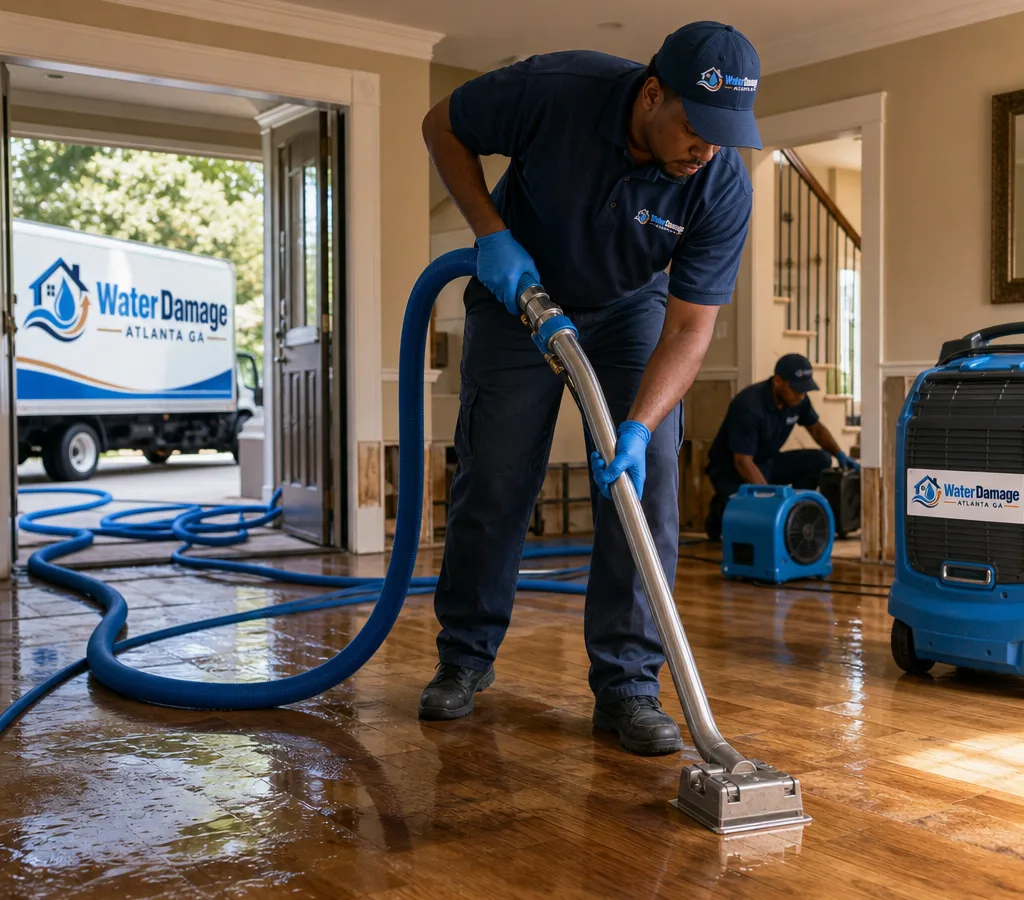
Truck-mounted or portable extraction to pull standing water from floors, carpets, and low areas before it wicks into adjacent rooms.
Water Damage Cleanup • Atlanta, GA
When water gets in, time matters. Our local crew responds fast, removes water, dries the structure, and documents the work so you can move forward with fewer headaches.
✓Water extraction
✓Measured structural drying
✓Written documentation
Control Moisture Early
If you are searching for water damage cleanup Atlanta GA, you likely have standing water, soaked flooring, wet drywall, or a musty odor that appeared fast. The goal in the first day is simple: stop the source, remove the water, and begin controlled drying before moisture spreads into walls, cabinets, insulation, and subfloors.
Water Damage Atlanta GA handles cleanup and restoration with a job plan you can understand. We start with a moisture assessment, set up extraction and drying equipment, and track progress with moisture readings so materials are dried to an appropriate level before repairs move forward. If you are also dealing with an insurance claim, we document conditions and drying steps so the file is easier to support.
Atlanta properties have a mix of older plaster and lath, mid-century homes with crawlspaces, and newer builds with engineered wood and open floorplans. Each reacts differently to water intrusion. A crawlspace can hold humidity and keep floors wet longer. Engineered flooring can swell at seams quickly. Our approach is tailored to the materials and how the water moved through the space, not a one-size checklist.
For a broader overview of related restoration work beyond cleanup, many customers start with water damage restoration.
Complete Cleanup Scope
Truck-mounted or portable extraction to pull standing water from floors, carpets, and low areas before it wicks into adjacent rooms.
Air movers and dehumidifiers are placed based on room volume, affected materials, and airflow so drying is controlled and measurable.
We use moisture meters and thermal imaging where appropriate to find hidden wet areas and confirm drying progress with documented readings.
If drywall, insulation, baseboards, or flooring cannot be dried to a safe condition, we remove only what is needed to expose wet cavities and prevent ongoing damage.
Cleaning of affected surfaces, HEPA vacuuming as needed, and targeted odor control steps when materials and conditions call for it.
You get a written scope, photo documentation, and straightforward updates so you know what is happening each day and what comes next.
Hidden Moisture Matters
Water does not stay where it lands. It follows seams, penetrations, and gravity paths into baseboards, under floating floors, behind cabinets, and down into crawlspaces or lower levels. The longer materials stay wet, the more likely you see swelling, delamination, staining, corrosion, and microbial growth.
We focus first on containment and control. That means isolating the wet zone when needed, establishing airflow patterns that actually dry the structure—not just the room air—and keeping humidity managed so drying continues overnight. You will also get guidance on what to avoid during the first phase, like running HVAC in a way that spreads humidity, pulling up flooring without a plan, or painting over wet drywall.
In Atlanta's warm, humid months, indoor humidity can stay high even after the visible water is gone. That is why dehumidification and monitoring are not optional steps. A room can look dry and still read wet in the sill plates, subfloor edges, or wall bottoms.
Request Emergency Service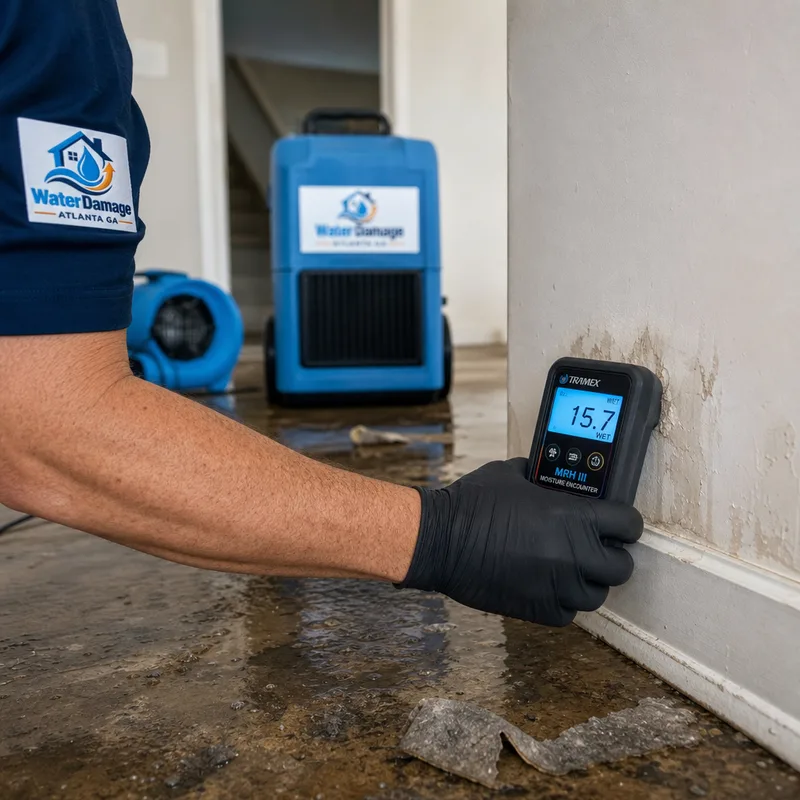
Extract, Dry, Verify
We identify the water source and confirm it is stopped. We also check for electrical hazards, ceiling sag, and slip hazards before equipment is brought in.
We document affected rooms and map moisture in walls, floors, and ceilings to define the real drying footprint, including hidden wet areas.
Standing water is removed first, then we extract from carpets and padding when salvageable, or remove materials when they cannot be restored.
We place air movers and dehumidifiers based on psychrometrics—temperature and relative humidity—and the materials involved, not just room size.
We track moisture readings and adjust equipment placement. If a wall cavity stays wet, we open the wet area with a controlled, minimal approach.
After drying targets are met, we perform final cleaning as needed and outline the repair plan so reconstruction can start without trapping moisture.
Straightforward Cost Guidance
Water damage cleanup in Atlanta typically ranges from about $900 to $4,500 for small to mid-size losses, while larger losses with extensive drying, demo, and multiple rooms often run $5,000 to $15,000+ depending on conditions. A simple supply-line leak caught early may only need extraction and a few days of drying; a ceiling leak affecting insulation and drywall usually costs more because materials must be removed and replaced.
Your price depends on water category, how far it migrated, the number of affected materials—drywall, insulation, and flooring—equipment days, access such as crawlspaces or tight closets, and required cleaning. Exact pricing is confirmed after an on-site inspection and moisture mapping.
Local Cleanup Planning
We serve Atlanta, GA (30305) and nearby areas where building style and access change the cleanup plan.
In Buckhead, larger homes often have multiple flooring types on one level—hardwood next to tile or carpet—so we pay close attention to how water moved across transitions and under baseboards to prevent a hidden wet perimeter.
In Midtown, condos and multi-unit buildings can involve shared walls and lower-level impact. We focus on moisture verification in adjoining surfaces and coordinate access so drying does not stall.
In Virginia-Highland and other older-infill neighborhoods, repairs can involve plaster, older trim profiles, and tighter wall cavities. Selective opening and careful drying strategy help avoid unnecessary removal.
In East Atlanta, pier-and-beam or crawlspace conditions can complicate drying if humidity remains elevated under the home. When the crawlspace is part of the affected area, we plan drying and monitoring so moisture is not left underneath.
If your property is outside these areas, the right approach is still the same: confirm the affected footprint with measurements, dry the structure with controlled conditions, and document each step so repairs are based on real moisture data.
Customer Experiences
“A supply line leaked under our sink and soaked the cabinet base and wood floor. They found moisture we didn't see, set up drying the same day, and kept checking readings until everything was actually dry.”
“We had water come through the ceiling after a heavy storm. The crew explained what had to be removed, what could be saved, and what the drying timeline would look like. The documentation helped with our claim.”
Answers Before Cleanup Begins
In most cases we can begin quickly because the first steps are time-sensitive: inspection, water extraction, and drying setup. After you reach out, we will confirm the situation—active leak or not—the affected areas, and access details so the right equipment arrives for the initial visit.
Yes. The cleanup fundamentals are the same, but commercial sites often require coordination around operating hours, occupied areas, and drying noise. We plan equipment placement and containment so business disruption is minimized while drying still stays effective.
Cleanup focuses on extraction, drying, cleaning, and removing materials that cannot be saved; restoration covers the repairs after drying, such as replacing drywall, trim, flooring, and repainting. Many projects need both phases, but the repair scope is based on what the moisture inspection shows after cleanup.
We only remove materials when drying in place is not appropriate or would take too long to be reliable. For example, wet insulation behind drywall usually needs removal to dry the cavity, while some wall sections can be dried using controlled openings and monitored equipment when readings support it.
Yes. We document the affected areas, moisture readings, drying equipment usage, and material removal so the claim file has clear support. Coverage decisions are made by the carrier, but thorough documentation helps the process stay organized.
Often it is, but it depends on the size of the affected area, whether a ceiling is compromised, and whether contamination is present. We will tell you right away if isolation, temporary relocation from certain rooms, or additional safety controls are needed.
Stop the water source if you can do so safely, avoid areas with ceiling sag or near electrical outlets, and move small valuables out of the wet zone. If you can, take a few photos of the affected areas for records, then leave wet materials in place until a proper drying plan is set.
Start Drying the Right Way
Tell us what happened, what rooms are affected, and whether the water source is stopped. We will respond with a clear plan to remove water, dry the structure, and document the work so repairs can start on solid ground.