
Real estate timelines
Buyers and sellers often need an objective report quickly so negotiations do not stall. We focus on clear findings, photo documentation, and practical next steps.
Mold Inspection • Atlanta, GA
Get a clear, written picture of what is going on in your property, where moisture is coming from, and what the next step should be before you commit to any cleanup or repairs.
✓On-site evaluation
✓Targeted moisture readings
✓Written findings
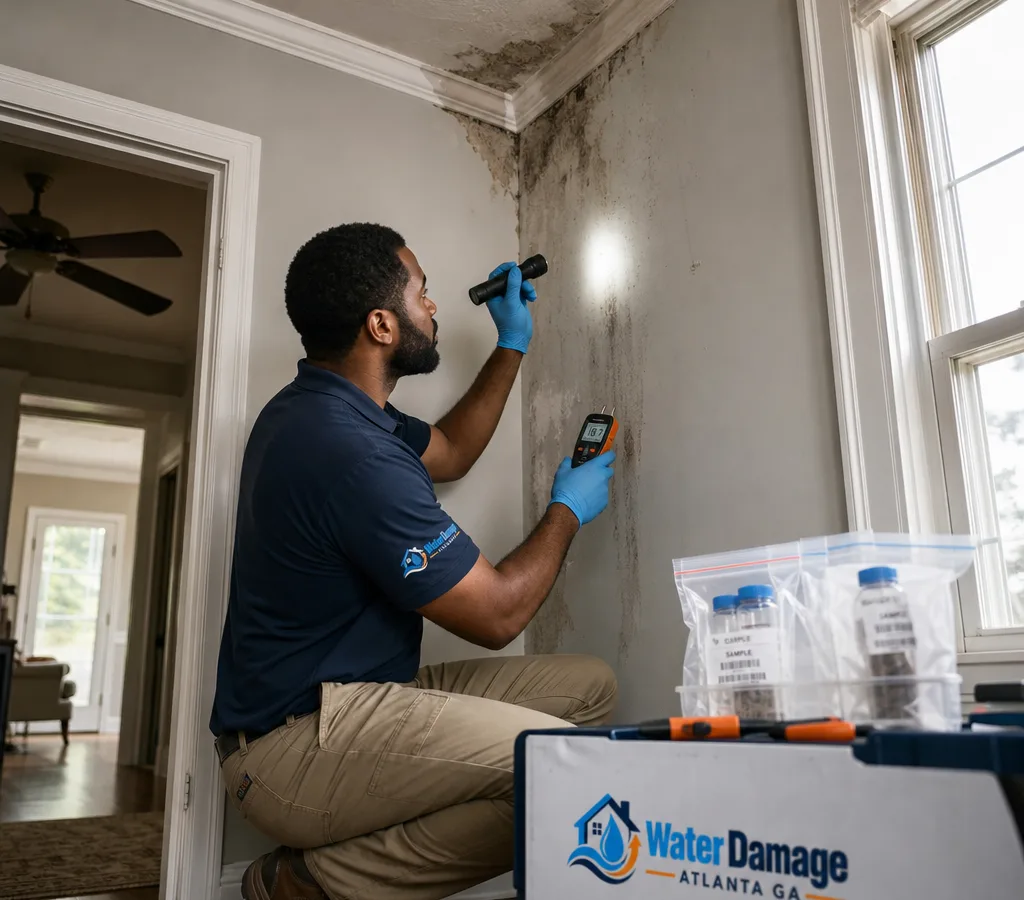
Document the Conditions First
Mold is rarely a simple surface problem. If it is showing up on drywall, around a window, under a sink, or along baseboards, there is almost always a moisture driver behind it. Our atlanta mold inspections are built to answer three practical questions: where the mold is, what conditions are feeding it, and what you should do next to protect the building and the people inside.
Water Damage Atlanta GA performs inspections for homeowners, landlords, buyers, and property managers across the Atlanta area. You get an on-site evaluation of visible growth and likely hidden areas, moisture readings where it matters, and a straightforward inspection report that you can use to plan repairs, document a concern, or decide whether professional remediation is needed.
If you are dealing with active leaks, overflow, or wet building materials, you may also need water damage restoration to stabilize the structure and prevent additional microbial growth. An inspection helps confirm whether mold conditions are present now, and what needs to be corrected so the problem does not keep returning.
Inspection and Moisture Mapping
A solid mold inspection is part building science, part careful documentation. We start by listening to your concerns and reviewing any history you know, like past roof leaks, plumbing issues, condensation, or a recent HVAC problem. Then we work through the areas where mold commonly develops in Atlanta properties: bathrooms and laundry rooms, kitchens and sink bases, basements and crawlspaces, and any exterior-adjacent walls that have been repeatedly damp.
During the inspection, we may use tools such as a moisture meter to map damp materials, a thermal imaging camera to help locate temperature patterns consistent with moisture, and a hygrometer to understand indoor humidity. We also evaluate ventilation and air movement (bath fans, dryer venting, and supply/return balance) because chronic humidity and condensation can keep materials wet even when there is no obvious leak.
When sampling is appropriate, we explain what the sample can and cannot tell you. Surface samples can help document visible growth, and air samples can help compare an indoor area to an outdoor control. Sampling is not required for every situation, and it is never a substitute for finding the moisture source.
Request Emergency Service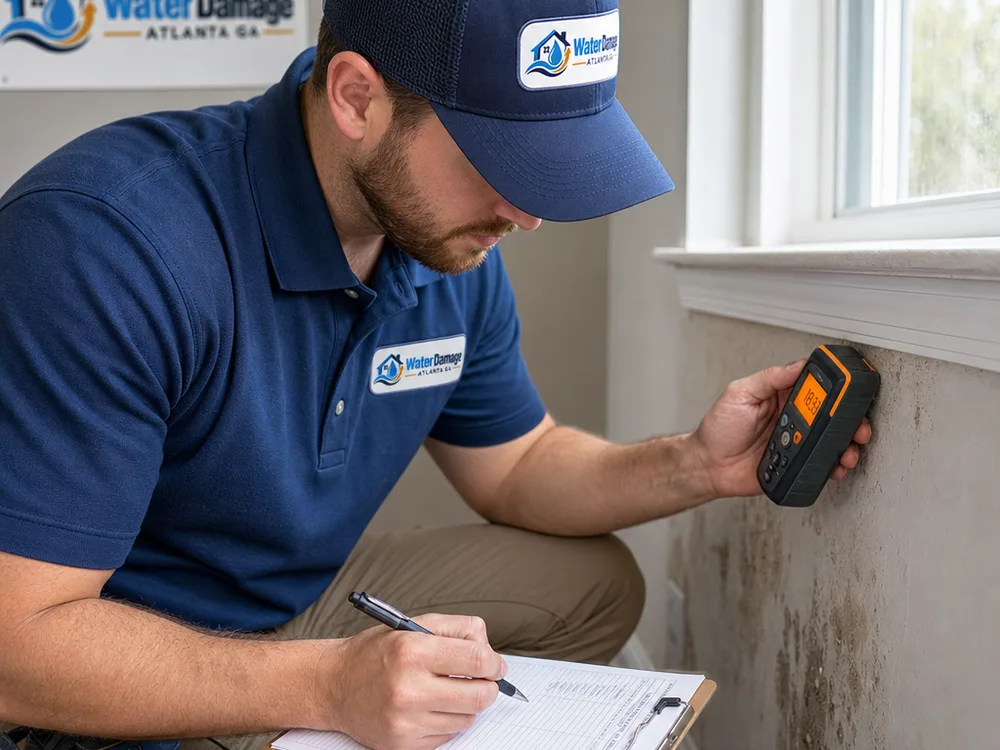
When an Inspection Helps
Buyers and sellers often need an objective report quickly so negotiations do not stall. We focus on clear findings, photo documentation, and practical next steps.
A persistent odor or irritation can point to hidden moisture. We check likely reservoirs like under flooring edges, behind vanities, and around return air pathways.
Even when surfaces look dry, moisture can remain in cavities and under materials. Readings help determine whether drying and repairs are complete or if additional action is needed.
Moisture migration from below can drive mold on framing and subfloors. We evaluate conditions, access, and visible structural materials where safe to do so.
For offices and retail spaces, we document the complaint area, HVAC influence, and any moisture patterns so building management can respond with a plan.
Atlanta Building Conditions
Atlanta's long stretches of humid weather make moisture management a year-round issue, not just a seasonal one. High indoor humidity can lead to condensation on supply ducts, around vents, and on cooler exterior-adjacent surfaces, especially when insulation or air sealing is inconsistent. That is why an inspection in this area should look beyond the spot you can see and focus on the condition that keeps materials damp.
Housing styles also influence where problems hide. In parts of Intown Atlanta like Midtown and Old Fourth Ward, you may see multifamily buildings and renovated spaces where plumbing chases, shared walls, and HVAC runs complicate tracing moisture. In neighborhoods with older housing stock such as Virginia-Highland, past roof or flashing repairs and older window systems can create repeating wetting at exterior walls. In Buckhead, larger homes may include multiple HVAC zones and more complex attic or crawlspace layouts, so identifying which system or area is driving humidity can matter.
We keep the focus on building conditions and documentation. If we find moisture, we note likely contributors (leak path, condensation, drainage or ventilation issues) so you can prioritize the fix that stops the mold from returning.
Inspect, Document, Advise
You tell us what you are seeing and where, plus any known history such as a past leak, recent repairs, or a real estate deadline. We confirm access needs (attic, crawlspace, mechanical rooms) before the visit.
We inspect the concern areas and adjacent materials, take targeted moisture readings, and document visible conditions with photos. We also check for common drivers like ventilation shortfalls and condensation patterns.
If sampling will materially change next steps, we collect it with chain-of-custody style documentation and explain what results mean in practical terms. If it will not change the plan, we tell you that too.
You receive a written summary of findings and recommendations. If remediation is warranted, the report supports scoping. If the issue is more about moisture control and repairs, we outline what to correct first.
Straightforward Cost Guidance
Most mold inspections in Atlanta typically range from about $250 to $750, depending on the size of the property, the number of areas evaluated, and whether sampling is included. A small, focused inspection for one suspect area is usually on the lower end, while larger homes, multi-unit situations, or investigations with multiple samples trend higher.
Final pricing depends on access (crawlspace/attic), how much moisture mapping is needed, how many rooms are involved, and the type and count of lab samples if you choose them. The exact cost is confirmed when the inspection scope is set for your property.
Atlanta Property Owner Experiences
“We had a musty smell that kept coming back after rain. The inspector traced moisture to a small area near a window and explained what needed to be repaired before any cleanup. The written report made it easy to talk with our contractor.”
“During our home purchase, we needed answers fast. The inspection was thorough, the photos were clear, and the recommendations were specific enough for the seller to address the problem.”
Clear Answers Before You Act
Schedule an inspection when you see suspected growth, smell a persistent musty odor, or have had a leak, overflow, or recurring condensation that may have wetted building materials. In Atlanta's humid conditions, waiting often turns a small moisture issue into a larger materials problem, so it is smart to document conditions early and identify the moisture driver.
You do not always need lab testing; many situations can be evaluated with a careful visual inspection plus moisture measurements and photo documentation. Testing is most useful when the growth is not clearly identifiable, when you need baseline documentation for a transaction or dispute, or when you are comparing one indoor area to an outdoor control to support next-step decisions.
Most appointments take about 60 to 120 minutes on site, depending on property size, access to crawlspaces or attics, and how many areas need moisture mapping. More complex situations, like multiple complaint areas or multi-unit layouts, can take longer because documenting pathways and adjacent materials is part of doing it correctly.
Yes, as long as access is safe and available, we can inspect crawlspaces and attics where mold often develops on framing when moisture levels stay elevated. These spaces matter in Atlanta because humid air and poor ventilation can keep wood and insulation damp, and the conditions below or above living areas can affect indoor air and odors.
A good inspection will tell you what conditions are present and what should be corrected first, especially the moisture source that allowed mold to grow. The inspection report supports a repair plan and, if needed, a remediation scope, but the exact repair method depends on what is discovered (leak location, building assembly, and how far moisture has traveled).
Yes. The goal is a written report that is easy to use: what was observed, where it was observed, what measurements support the findings, and what actions are recommended. Clear documentation is particularly helpful when timing matters, such as during a real estate due diligence window or when coordinating multiple trades for repairs.
Inspect Before You Invest
Tell us what you are noticing and where, and we will schedule an inspection that fits the urgency of the situation. You will get documented findings and practical next steps for your Atlanta property.