
Containment that protects clean areas
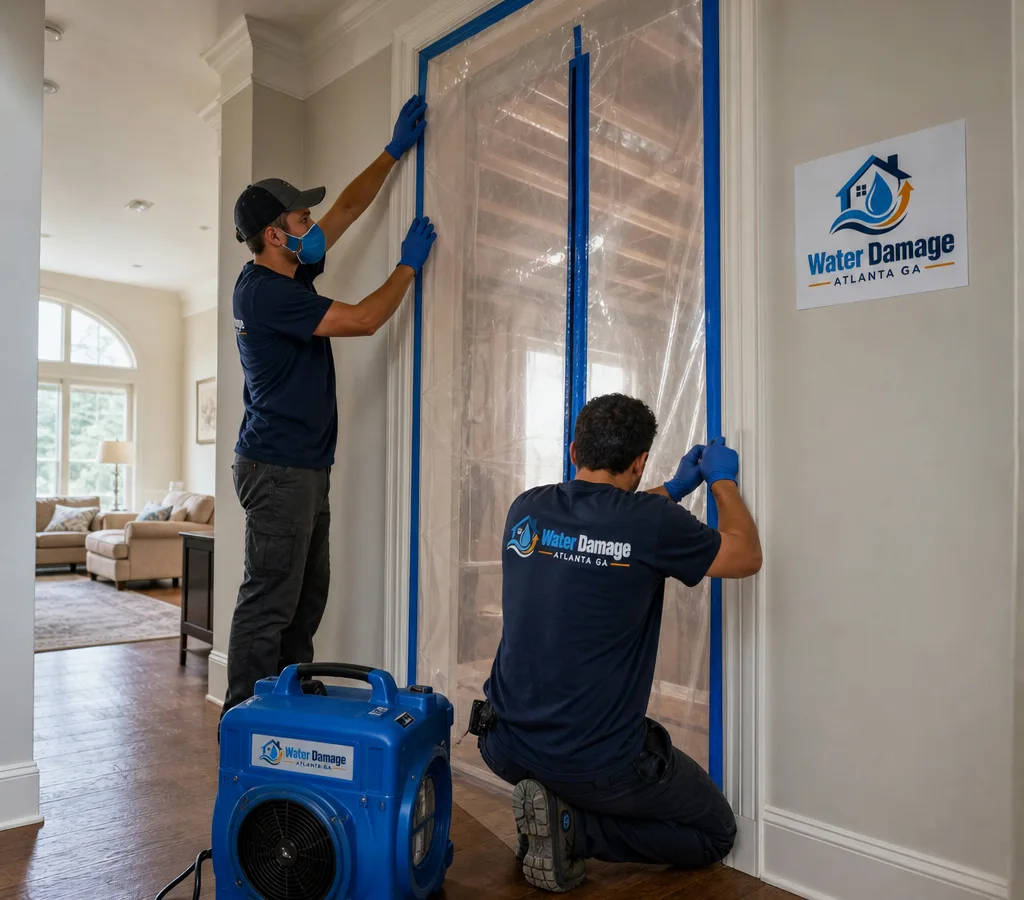
We isolate the affected space before disturbing materials, then keep airflow controlled so spores and dust stay in the work zone.
Mold Clean Up • Atlanta, GA
If you smell musty odors, see staining, or had a recent leak, get a contained cleanup plan that addresses the moisture source, protects the rest of the home, and documents what was done.
✓Controlled containment
✓Moisture source checks
✓Written documentation
Contained Work, Lasting Control
Mold clean up atlanta work should be more than wiping a surface. A proper cleanup controls the spread of spores, removes contaminated material when needed, and fixes the moisture problem that let mold grow in the first place.
In Atlanta homes, mold often shows up after plumbing leaks, HVAC condensate issues, roof leaks, or wet building materials that never fully dried. Basements and crawlspaces can be a factor too, but mold can also appear in a single room like a laundry area, bathroom ceiling, or inside a wall cavity after a small drip.
What to look for in a real mold cleanup:
What to avoid: any approach that treats mold like a simple housekeeping job, or any contractor who plans to fog or spray first without containment and source control. Chemicals can disinfect a surface, but they do not replace removal of contaminated porous materials or fixing the moisture that is feeding the growth.
Assess, Contain, Clean
At Water Damage Atlanta GA, mold clean up starts with a walkthrough and moisture check so we understand what is wet, what was wet, and what is at risk behind surfaces. Then we build the job around containment and safe removal.
Typical steps on an Atlanta mold cleanup:
If the mold issue began with a leak or overflow, it often makes sense to coordinate cleanup with water damage restoration so drying and repairs follow a single, consistent plan.
Request Emergency Service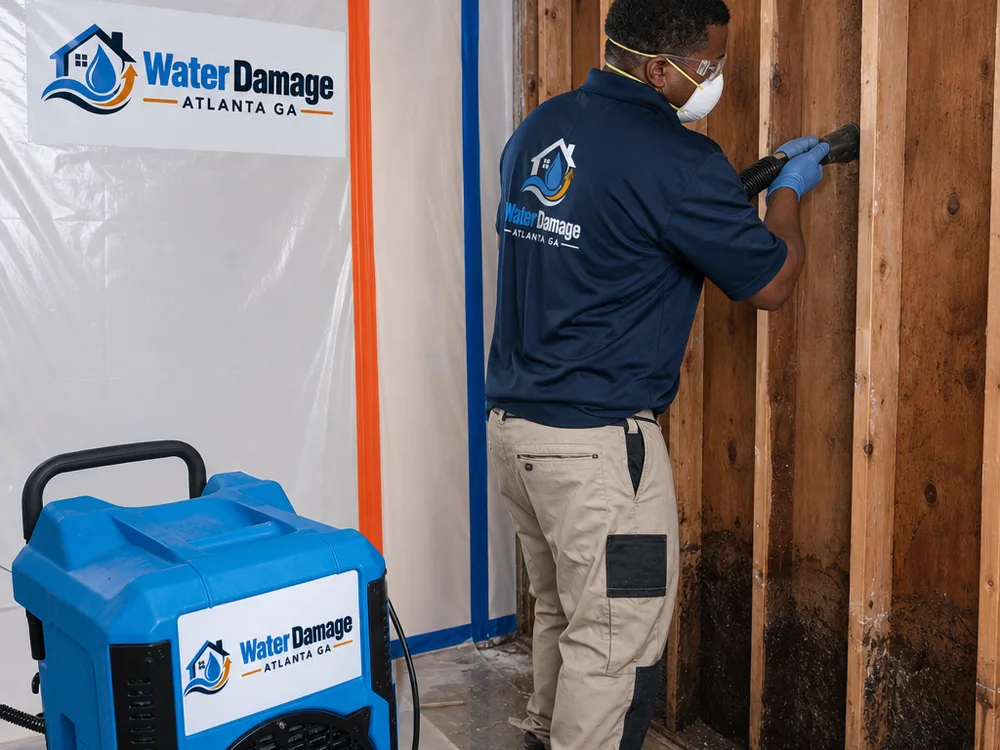
Controlled from Start to Finish
We isolate the affected space before disturbing materials, then keep airflow controlled so spores and dust stay in the work zone.
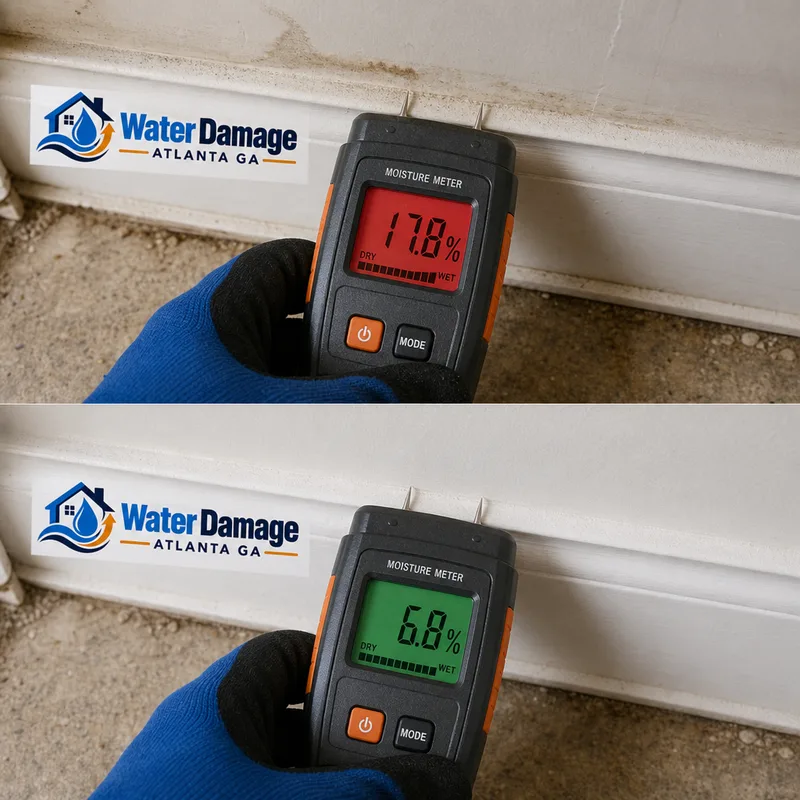
Mold returns when humidity and wet materials stay in place. We focus on drying and identifying the moisture source so the fix holds.
You receive a straightforward explanation of what is affected, what is being removed or cleaned, and what the next steps are for restoration.
When drywall, insulation, or flooring must come out, we remove and bag it inside containment and keep paths through the home protected.
When cleanup opens walls or ceilings, we can coordinate the handoff to repairs so the home gets back to normal without gaps in responsibility.
Atlanta Moisture Patterns
Atlanta's warm, humid stretches can keep indoor relative humidity elevated, especially when HVAC is undersized, drain lines clog, or a crawlspace stays damp. That matters because mold problems are often a moisture management problem first.
We commonly see different risk patterns across the city:
For property managers and business owners, mold cleanup planning also needs to account for occupancy, access hours, and keeping unaffected areas operational while the contained work happens.
Straightforward Cost Guidance
Mold clean up in Atlanta typically ranges from about $1,000 to $6,000 for many residential projects, with small, contained areas sometimes starting a bit below that and larger or multi-room remediation running $8,000+ depending on scope. A single-room cleanup with limited removal is usually less than a job that requires opening walls, removing insulation, and running drying equipment.
Final price depends on the size of the affected area, how deep the contamination goes, access conditions, how much demolition is required, and whether drying and dehumidification are needed. The exact cost is confirmed after an on-site inspection and written scope.
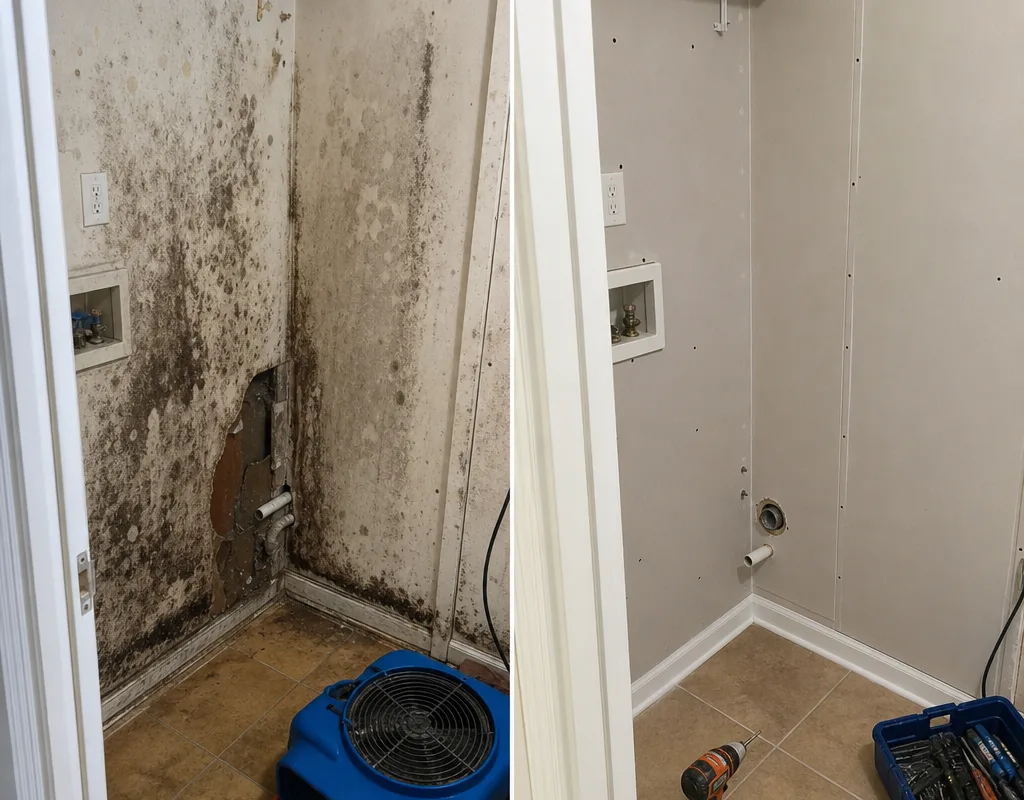
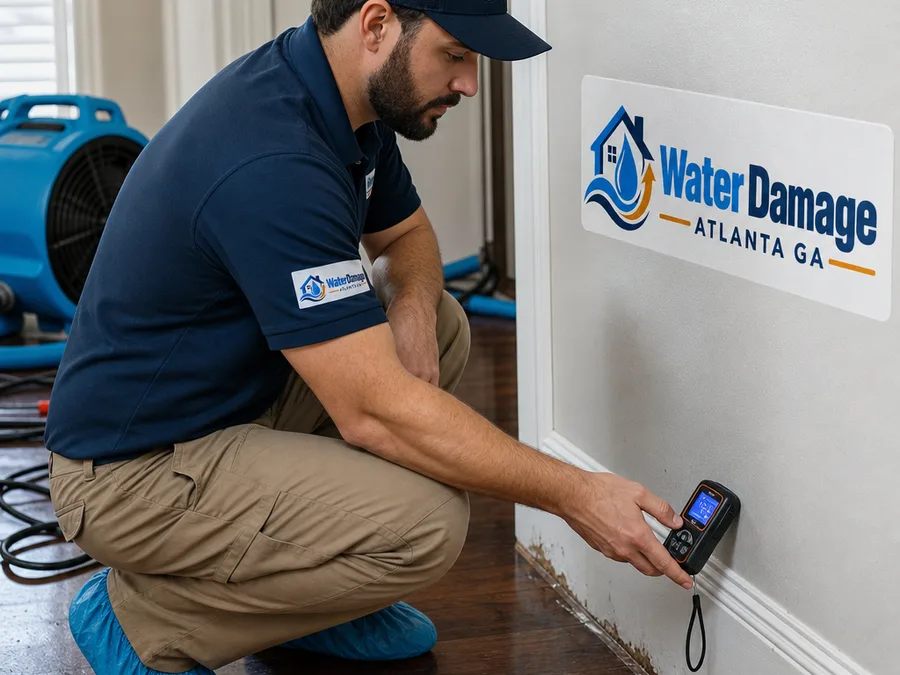
Controlled Work in Practice
Answers Before Cleanup Begins
Start time depends on current demand and the scope, but we prioritize situations with active moisture, strong odors, or visible growth spreading beyond a single surface. If you recently had a leak, getting containment and drying started quickly can reduce how much material needs to be removed.
Porous materials like drywall and insulation usually need to be removed when mold has grown into them, because they cannot be reliably cleaned all the way through. Hard surfaces like framing can often be cleaned with HEPA vacuuming and appropriate antimicrobial products, then dried and monitored.
Many projects can be completed while the home remains occupied if the affected area can be fully contained and you can avoid the work zone. If mold is widespread, ventilation is shared across spaces, or a household member has respiratory sensitivities, it may be better to limit time on-site during demolition and cleaning.
Mold sampling is not required for every cleanup, and visible growth with a moisture source is often enough to justify remediation. If you want testing for documentation, we can coordinate the workflow so the area is suitable for third-party sampling and post-remediation clearance after the cleanup is complete.
If it is safe, stop the water source and avoid disturbing the area because cleaning or scraping can spread spores. Keep HVAC running normally unless the affected area is in the return path, and move small personal items out of the immediate area if you can do it without contacting visible growth.
A small, contained area may take 1 day, while larger projects that require removal, drying, and verification can take several days. Timeline depends on how wet the materials are, how much has to be removed, and whether drying equipment needs to run before the space is ready for repairs.
Start with a Clear Scope
Tell us what you are seeing and where it is happening. We will inspect, explain the containment and removal plan, and outline the steps needed to control moisture and move toward restoration.