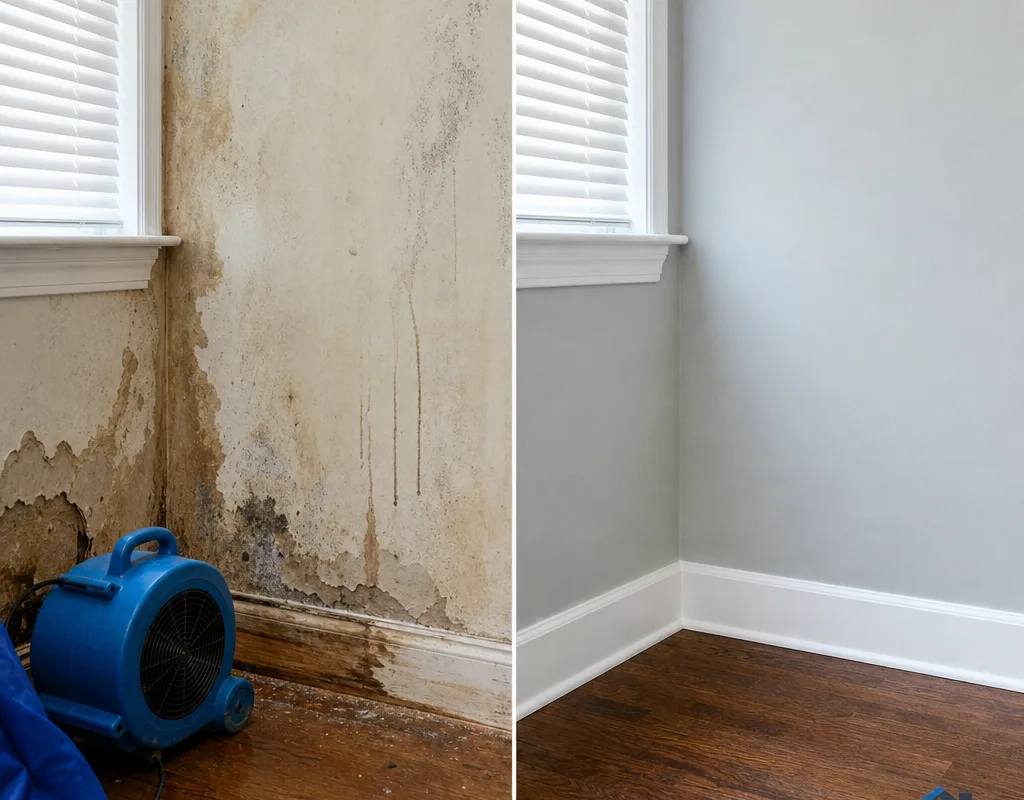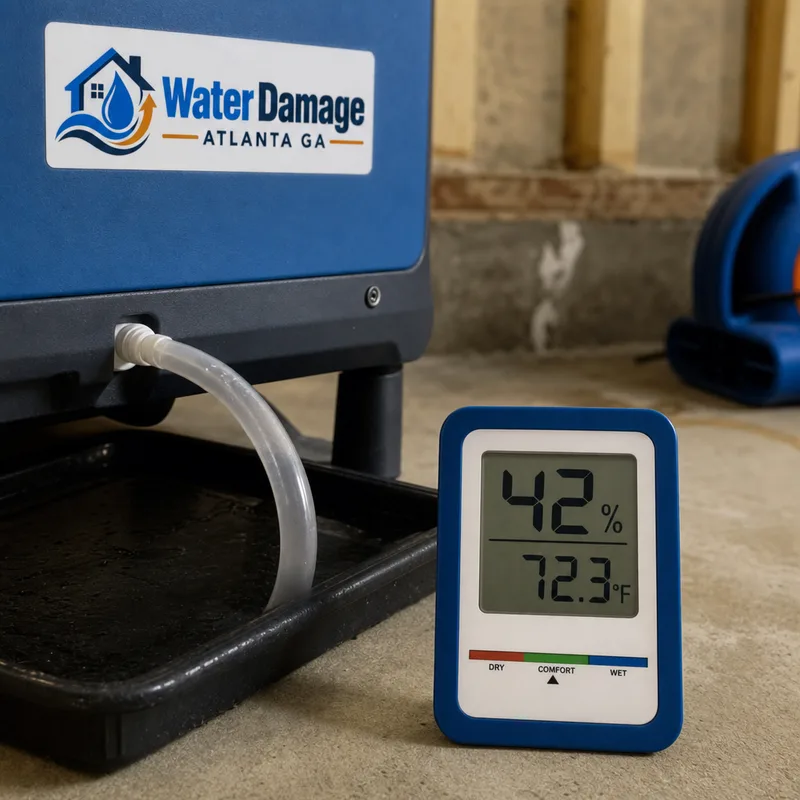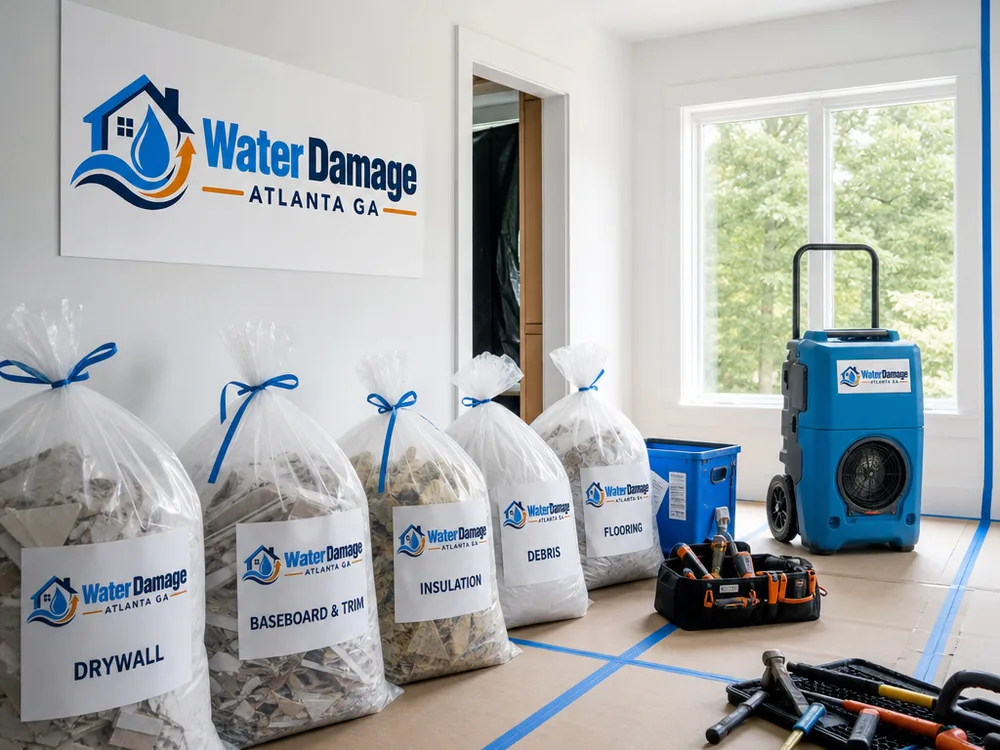
Moisture mapping you can understand
We identify where water traveled—including behind baseboards and under floors—and explain what must be opened, dried, cleaned, or replaced so the scope matches the actual conditions.
Property Restoration • Atlanta, GA
When a property is damaged, the next few hours set the tone for the entire recovery. Get a clear plan, careful containment, and quality repairs from one team serving Atlanta homes and businesses.
✓Moisture mapping
✓Controlled work zones
✓Mitigation and repairs
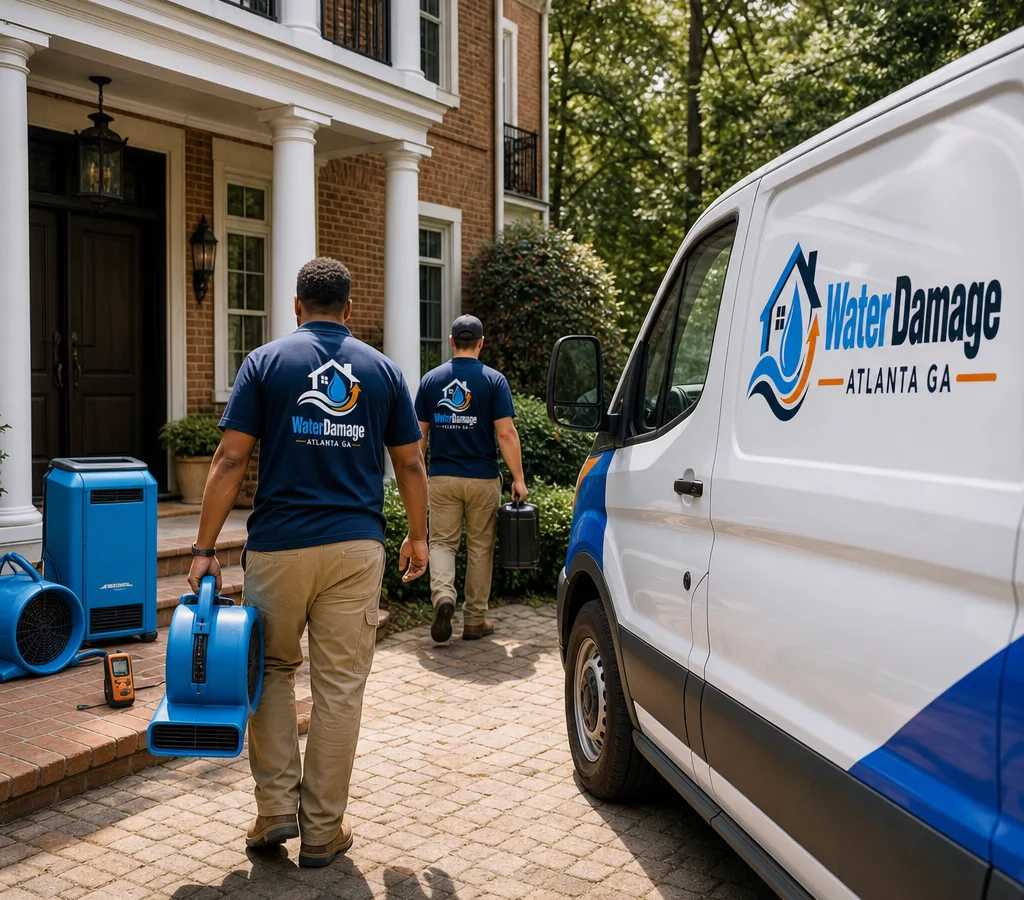
Stabilize First. Rebuild Second.
If you are searching for a restoration company Atlanta property owners can rely on, you are usually dealing with a problem that has to be stabilized first and rebuilt second. Restoration work is the overlap between emergency mitigation—stopping damage from spreading—and construction repair—putting the building back to pre-loss condition.
At Water Damage Atlanta GA, our restoration services in Atlanta, GA are built around three priorities: protect the structure, document conditions clearly, and restore the space so it is safe to occupy again. That means stopping moisture migration, controlling humidity, preventing cross-contamination, and returning walls, floors, and finishes to a clean, sound condition.
A typical restoration scope may include:
Many losses begin with supply line breaks, overflowing tubs, HVAC drain issues, appliance leaks, roof intrusions, or storm-driven water entry. We use moisture mapping and drying documentation to track progress so the job is based on measurements, not guesswork.
Measured, Controlled Recovery
We identify where water traveled—including behind baseboards and under floors—and explain what must be opened, dried, cleaned, or replaced so the scope matches the actual conditions.
When materials need to come out, we set up containment and use negative air practices when appropriate to keep dust and debris controlled in occupied homes and commercial spaces.
Air movers, dehumidifiers, and targeted airflow are placed to match the affected materials, not just the room size. We re-check moisture to confirm the structure is drying as expected.
Photos, notes, and moisture logs help you, your property manager, or your insurer understand what happened and what it takes to restore the property.
Many projects stall when emergency work and rebuild work are split between different crews. We keep the handoff tight so repairs start as soon as the space is ready.
Local Conditions Shape the Plan
Restoration in Atlanta is rarely one-size-fits-all. Older in-town homes often have layered renovations—multiple flooring types, older plaster or mixed framing, and patched plumbing runs—so we spend extra time tracing pathways and checking adjoining rooms. In higher-density areas like Midtown, elevator rules, loading zones, and working hours can affect how equipment and materials move in and out.
Humidity is also a real operational factor in metro Atlanta. When outdoor humidity is high, opening windows or relying on household fans can slow drying and push moisture into adjacent materials. Professional drying uses controlled airflow and dehumidification so the structure reaches dry standard without creating secondary damage.
We routinely support owner-occupied homes, condos, retail spaces, and office suites throughout the Atlanta area. If a loss involves active leaks, the first step is stabilizing the source—or coordinating with a plumber or roofer—then moving into extraction, containment, and drying so repairs can start on solid footing.
For water-related situations, our team applies the same documentation-first approach to extraction, drying, and rebuild coordination.
Request Emergency Service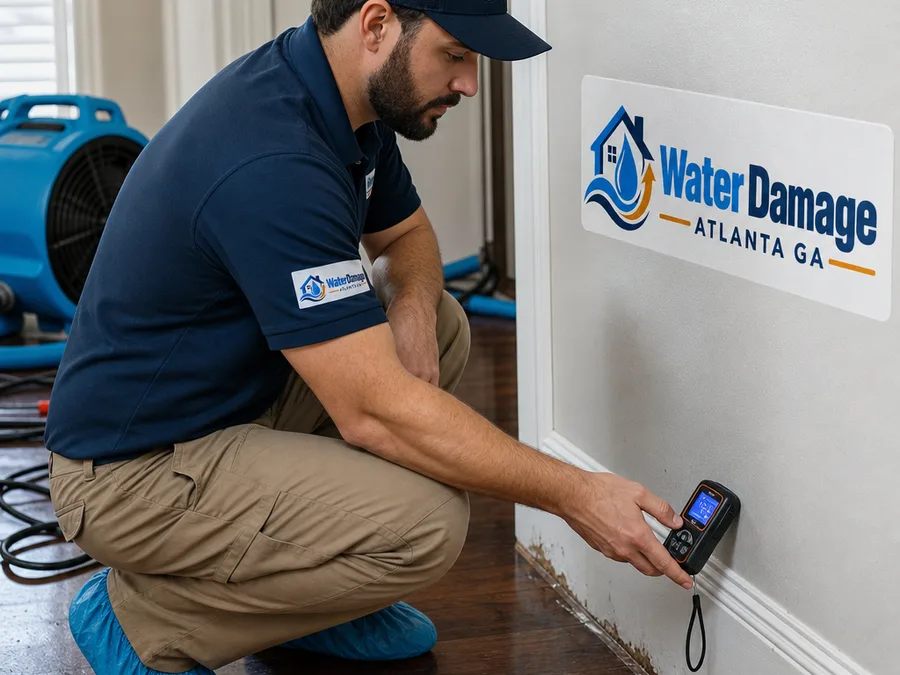
Assess, Mitigate, Restore
We assess affected areas, look for electrical exposure, ceiling sag, wet insulation, and other safety issues, and identify whether the source is still active. If the leak is ongoing, stopping it or coordinating the right trade comes first.
We map moisture, photograph conditions, and outline what can be dried in place versus what must be removed. You receive a plain-English explanation of what the job needs and why.
We extract water, protect unaffected areas, and place drying equipment based on material type and airflow needs. Follow-up checks track moisture reduction and confirm progress.
After drying, we clean affected structural surfaces and address odor at the source using methods appropriate for the material and condition.
Once materials meet dry standard, we rebuild drywall, trim, paint, flooring transitions, and finishing details. The goal is a finished space that looks right and performs right.
Straightforward Cost Guidance
Restoration services in Atlanta typically range from about $1,500 to $8,000+ for smaller to mid-sized residential losses, while larger projects involving multiple rooms, significant demolition, or rebuild work can run $10,000 to $30,000+ depending on scope. A simple extraction and dry-out is usually far less than a project that requires removing drywall, replacing flooring, and repainting.
Final cost depends on affected square footage, water category or contamination level, how long materials stayed wet, access—including condos and tight parking—and what finishes must be removed and replaced. Exact pricing is confirmed after an on-site inspection and moisture mapping.
Property Owner Experiences
“They explained what needed to be opened up and what could be dried in place, then showed us the moisture readings as things improved. The repairs matched the rest of the house and the project stayed organized the whole time.”
“We had a leak that affected two rooms and were worried it would turn into a huge mess. The team contained the area, kept dust down, and the rebuild was handled without a long gap after the dry-out.”
Answers Before Work Begins
Most restoration projects can begin quickly once we confirm access to the property and the situation is safe to enter. The first visit focuses on stopping active damage—or coordinating that step—extracting water if present, and setting a drying plan based on moisture readings so conditions do not worsen while you wait.
Yes. We can manage the initial mitigation work and then complete the repairs needed to return the space to pre-loss condition. Keeping the same team involved helps avoid delays between dry-out and reconstruction, which is a common cause of extended downtime.
We decide based on moisture content readings, material type, and whether the material can return to a stable condition without trapping moisture. Some wet assemblies may dry successfully with controlled airflow, while materials that are swollen, delaminated, or contaminated need removal to prevent ongoing problems.
Yes. We provide documentation such as photos, notes, and drying logs that insurers commonly request, and we can help you understand what is in the scope and why. Coverage and deductible decisions still come from your policy and adjuster, but clear documentation can reduce back-and-forth.
If it is safe, stop the source of water, shut off power to affected areas when there is a risk of electrical contact, and move valuables or sensitive items out of the impacted space. Avoid running household fans into wall cavities or opening windows during humid Atlanta weather, since that can slow controlled drying and spread moisture to adjacent materials.
Yes. We work in residential and commercial settings, including occupied spaces where containment, noise planning, and scheduling matter. For businesses, we focus on isolating the affected area and creating a workable plan that supports reopening and ongoing operations where possible.
Start with a Clear Scope
Tell us what happened and what areas are affected, and we will schedule an on-site inspection in Atlanta to map moisture, outline next steps, and provide a written scope for restoration and repairs.