
Containment first
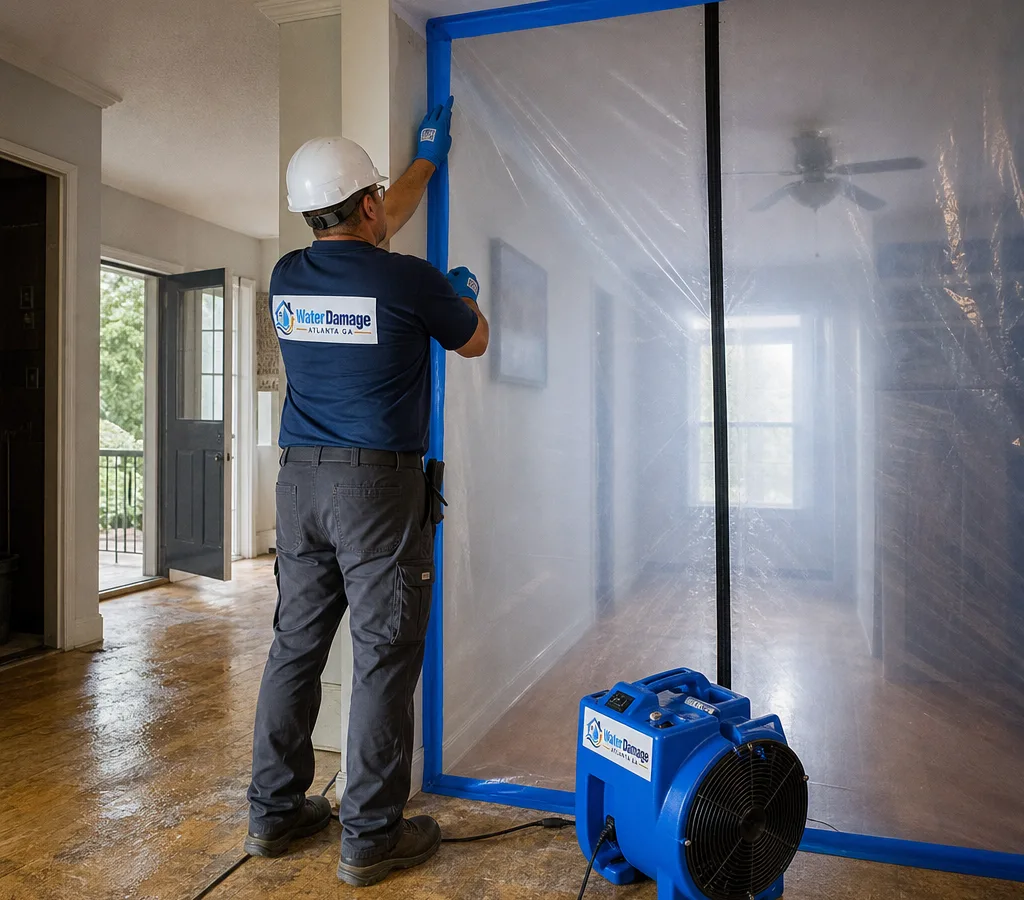
We isolate affected areas with plastic sheeting and controlled entry so spore movement stays limited to the work zone.
Mold Remediation • Atlanta, GA
If you have visible growth, a musty odor, or a recent moisture event, our team contains the affected area, removes contaminated materials, and documents the work so you can move forward with confidence.
✓Controlled containment
✓HEPA air filtration
✓Written work scope
Controlled Work from the Start
When you hire a mold remediation company Atlanta homeowners and property managers rely on, you are paying for controlled work. Mold cleanup is not a wipe-down job. Done correctly, it is a managed process that keeps spores from spreading to clean areas, removes contaminated building materials that cannot be saved, and leaves the space ready for repair.
Atlanta's humid weather makes moisture problems linger longer than people expect, especially in basements, crawlspaces, and behind finished walls. We see it after roof leaks, plumbing leaks, HVAC condensate issues, and even small overflows that dried on the surface but stayed wet inside materials.
Our mold remediation in Atlanta, GA is designed for:
If the source moisture is still active, remediation will not hold. We help you identify what fed the growth, then build a plan that addresses both the contamination and the conditions that caused it.
Structured Mold Control
We isolate affected areas with plastic sheeting and controlled entry so spore movement stays limited to the work zone.
HEPA-filtered negative air machines help keep air moving in the right direction during removal, cleaning, and final detailing.
Porous materials that cannot be reliably cleaned—often drywall, insulation, carpet pad, and some ceiling tiles—are removed and disposed of properly.
We detail surfaces using HEPA vacuuming and appropriate cleaning methods for the material so residue is addressed, not just the visible staining.
Moisture meters and targeted inspections help confirm whether building materials are actually drying, not just feeling dry on the face.
You get a written scope of work and progress notes so you know what was removed, what was cleaned, and what comes next.
Local Building Conditions
Mold can start anywhere moisture sits, but some Atlanta property patterns show up again and again.
In older neighborhoods with a mix of original and renovated homes, like Virginia-Highland and parts of Grant Park, we often find growth tied to past leaks that were patched but not dried behind plaster or drywall. In Buckhead and Midtown condos, mold issues frequently trace back to shared plumbing walls, HVAC condensate lines, or an overflow that reached adjacent units. In East Atlanta and similar areas with crawlspaces, moisture and limited ventilation can combine with seasonal humidity and create recurring musty odors and surface growth on framing.
We handle remediation with the building type in mind. A contained removal plan for a bathroom wall is different from a crawlspace project, and both differ from a commercial suite where work needs to stay controlled around occupied spaces.
If you are also dealing with damage from a leak or overflow, our team can coordinate with water damage restoration so drying and remediation happen in the right order.
Request Emergency Service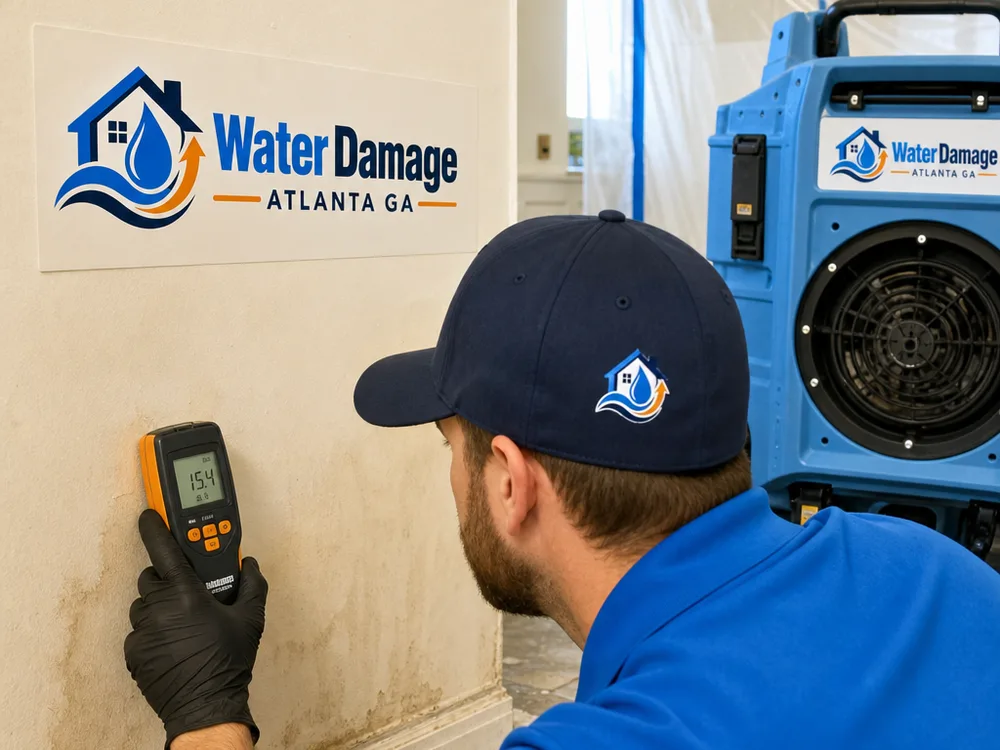
Contain, Remove, Verify
We inspect the suspected areas, look for active moisture, and outline what needs containment, what can be cleaned, and what needs removal. If there is a current leak or humidity source, that becomes part of the plan.
We establish the work zone, protect adjacent areas, and set HEPA filtration and negative air as needed for the scope.
We remove unsalvageable porous materials and bag-out debris through controlled pathways to reduce cross-contamination.
We HEPA vacuum, damp wipe, and use appropriate antimicrobial products where they make sense for the material and conditions.
When moisture is part of the issue, we verify drying progress with moisture checks. Remediation is only as durable as the moisture control behind it.
We review the completed scope with you and note any follow-up repairs needed to close walls, replace insulation, or restore finishes.
Straightforward Cost Guidance
Mold remediation in Atlanta typically ranges from about $750 to $6,000+, with small, contained areas often landing in the $750 to $1,800 range and larger jobs involving multiple rooms, crawlspaces, or significant material removal running $2,500 to $6,000+.
Price depends on the size of the affected area, how much drywall, insulation, or flooring must be removed, how hard it is to access the area, the containment level needed, and whether drying equipment is required. The exact cost is confirmed after an on-site inspection and a written scope of work.
Property Owner Experiences
“We had a musty smell that kept coming back. They found wet drywall behind a vanity, contained the bathroom, removed the damaged material, and the odor was gone once everything dried out.”
“Our condo had water get into a shared wall. The crew kept the area sealed off, cleaned thoroughly, and gave us clear notes for the building manager and the contractor doing the repairs.”
“They explained what had to be removed versus what could be cleaned, and the plan matched what we saw during the work. It felt controlled the whole time.”
Answers Before Work Begins
Many residential mold remediation projects take 1 to 3 days for contained removal and cleaning, but timelines stretch when drying is needed or when multiple areas are involved. In Atlanta, humidity can slow drying if the moisture source was recent or if the affected area is a crawlspace or behind finishes, so we plan the sequence around verified moisture levels rather than the calendar.
Usually, no. For a single room with proper containment and air controls, most households can stay home and simply avoid the work area. If the affected area is widespread, involves HVAC distribution, or impacts bedrooms or main living spaces, we will tell you up front what is realistic for occupancy and how we will isolate the work.
Sometimes, but only when the mold is limited to non-porous or semi-porous surfaces and the material is not structurally or deeply contaminated. If drywall, insulation, or carpet pad has been wet and colonized, removal is often the correct approach because those materials are hard to clean all the way through. We base this on what we can see, what moisture readings show, and how the material responds during inspection.
Mold comes back when moisture comes back. Remediation removes contamination in the affected area, but the lasting fix is controlling the source, such as a plumbing leak, a roof intrusion, or persistent condensation around HVAC components. We focus the scope on both: controlled removal and cleaning, plus clear guidance on what needs to change so the conditions do not repeat.
Coverage depends on your policy and what caused the moisture. Some claims are tied to sudden events like a supply line break, while long-term seepage or maintenance issues may be excluded. We can provide documentation of affected areas and the remediation scope so you have what you need when you talk with your adjuster.
Keep the area as undisturbed as possible and avoid scraping or spraying bleach, which can spread particles and complicate containment. If it is safe, stop the moisture source and make a clear path to the work area, especially in tight Atlanta homes where parking and access can be limited. We will walk you through any prep that matters for your specific layout.
Start with a Clear Scope
Tell us what you are seeing and where it is happening. We will schedule an inspection, explain the containment approach, and provide a written scope for mold remediation in Atlanta, GA so you can make a confident decision.